Restore Your Smile. Rebuild Your Confidence.
Missing one tooth, several teeth, or looking for a more stable alternative to dentures? Q Smiles Dentistry offers personalized dental implant solutions designed to restore the function, appearance, and confidence of your smile.
From single dental implants to full-arch solutions, we’ll help you understand your options and find the treatment that fits your needs.
Personalized implant care for patients in North Miami Beach and surrounding communities.
Dental implants are designed to replace missing teeth with a stable foundation that looks, feels, and functions more like natural teeth.
Unlike removable solutions, implants are placed in the jawbone and can support a single crown, multiple replacement teeth, or a complete arch.
At Q Smiles Dentistry, treatment begins with a personalized evaluation of your smile, oral health, bone structure, and goals.
✓ Restore chewing function
✓ Replace one or multiple missing teeth
✓ Provide stability without relying on neighboring teeth
✓ Help preserve supporting bone
✓ Support natural-looking restorations
✓ Provide options for patients struggling with removable dentures
No two cases of tooth loss are exactly alike. Your treatment depends on how many teeth are missing, your bone structure, oral health, and what you want to achieve.
Missing one tooth? A single dental implant can replace the missing tooth without requiring neighboring healthy teeth to support a traditional bridge.
When several teeth are missing, strategically placed dental implants may support multiple replacement teeth, depending on the individual treatment plan.
For patients frustrated by loose or unstable removable dentures, dental implants can provide additional support and stability.
All-on-X is a full-arch treatment option for patients with extensive tooth loss or multiple failing teeth. A strategic number of dental implants supports a fixed upper or lower restoration, providing an alternative to relying only on removable dentures.
Many adults with missing or failing teeth may be candidates for dental implants, but the right treatment begins with understanding your individual condition.
During your evaluation, several factors help determine which implant options may be appropriate for you.
Healthy gums help create a strong foundation for dental implant treatment. Existing periodontal conditions may need to be addressed before implant placement.
Dental implants require sufficient bone for support. When bone loss is present, additional treatment may sometimes be recommended before or during implant placement.
Your treatment plan depends on whether you are replacing one tooth, several teeth, or a complete arch.
Existing infections, periodontal disease, failing teeth, and other dental conditions are considered when developing your treatment plan.
Bone loss does not automatically mean dental implants are impossible. Bone grafting and other surgical techniques may help create a stronger foundation for implant placement in appropriate candidates.
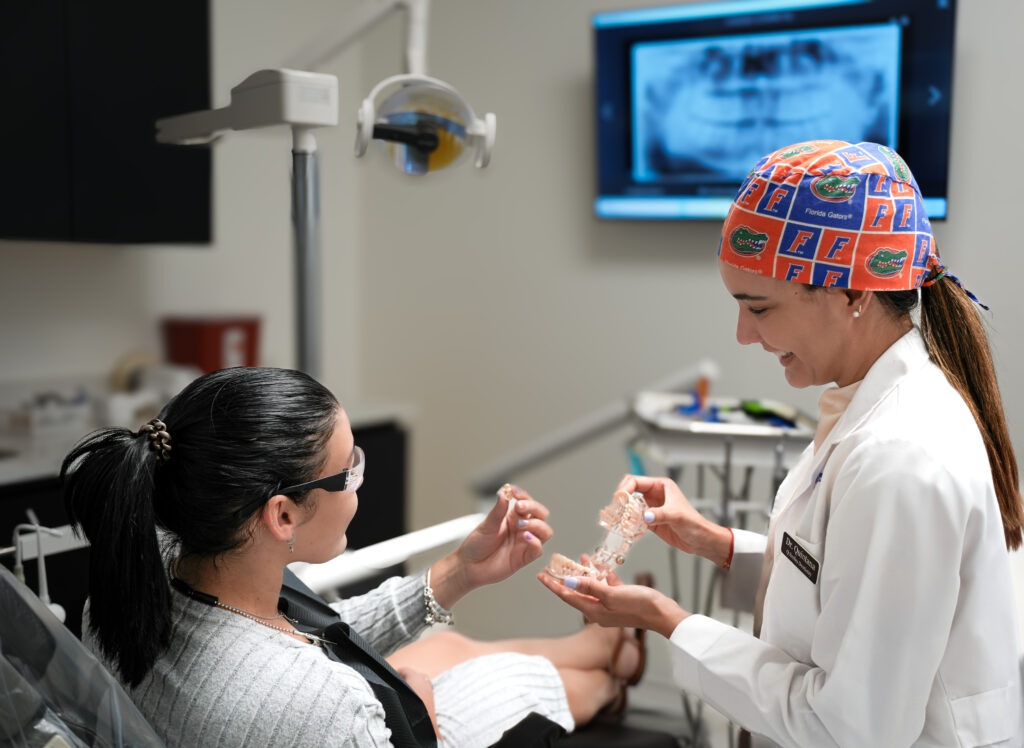
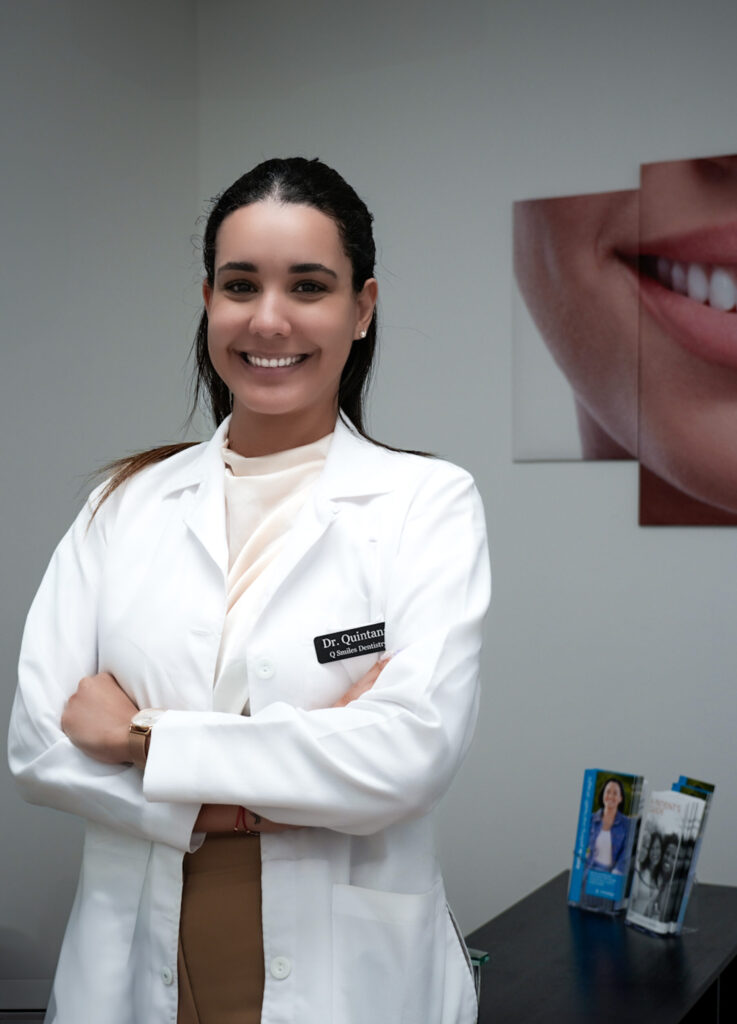
Dr. Adeleidys Quintana evaluates each patient’s missing teeth, remaining teeth, gum health, bone support, bite, medical history, and restorative goals before recommending a dental implant treatment plan. Findings and available options are explained clearly so patients can make an informed decision about their care.
Every implant case is different, but treatment generally follows several important stages from evaluation to final restoration.
We evaluate your teeth, gums, bite, bone structure, medical considerations, and treatment goals.
Your implant plan is developed around your individual anatomy and the number and condition of the teeth being replaced.
The implant is surgically positioned in the planned area of the jawbone according to your individualized treatment plan.
The implant is given time to integrate with the surrounding bone. Healing time varies depending on the patient and complexity of treatment.
Once appropriate healing has occurred, the implant can support the planned restoration, such as a crown, bridge, implant-supported denture, or full-arch prosthesis.
Successful dental implant treatment isn’t only about replacing a tooth. The surrounding bone and soft tissues also play an important role.
When additional support is necessary, your treatment plan may include procedures designed to prepare the implant site.
Bone grafting may be recommended when bone volume has been lost following tooth loss, periodontal disease, infection, or other conditions.
Its purpose is to help create sufficient support for future implant placement when clinically appropriate.
Every dental implant case begins with a different condition, treatment need, and goal. Explore real cases completed at Q Smiles Dentistry to see how personalized restorative treatment can help rebuild function and appearance. Individual results vary, and a clinical evaluation is required to determine the appropriate treatment.
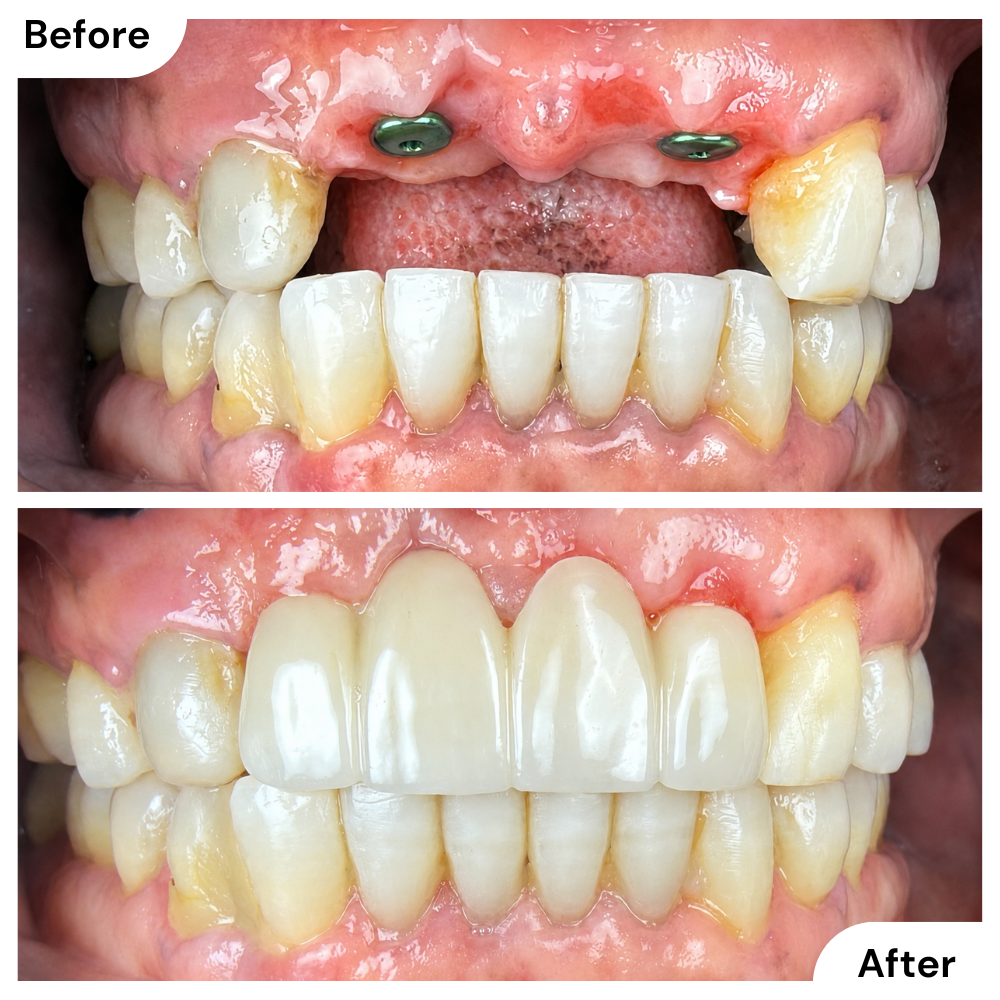
Dental implant costs vary depending on the number of teeth being replaced, type of restoration, bone health, and whether additional procedures are needed.
The complete dental implant process often takes several months, but timing varies by patient. After the implant is placed, the surrounding bone usually needs time to heal and integrate before the final restoration is attached. Bone grafting, extractions, the number of implants, and individual healing may affect the timeline. Q Smiles Dentistry will provide a personalized estimate after your evaluation.
Many adults with one or more missing or failing teeth may be candidates for dental implants. Healthy gums, adequate bone support, good oral hygiene, medical history, smoking status, and overall health are important considerations. A clinical examination and appropriate diagnostic imaging are necessary to determine whether implant treatment is suitable for you.
Bone loss does not automatically prevent you from receiving dental implants. Depending on its location and severity, bone grafting or another preparatory procedure may help create sufficient support for implant placement. Your dentist must evaluate your bone structure before recommending the appropriate treatment.
A dental implant replaces a missing tooth using an implant placed in the jawbone and a restoration attached above it. A traditional dental bridge replaces a missing tooth by using neighboring teeth for support. Each option has different requirements, benefits, costs, and maintenance needs. The best choice depends on the condition of your teeth, gums, bone, and bite.
Dental implant placement is performed with appropriate anesthesia to help maintain comfort during the procedure. Some swelling, tenderness, or temporary discomfort may occur afterward and varies by patient and treatment complexity. Your dental team will provide aftercare instructions and explain how to manage expected symptoms. Contact the office if pain becomes severe, worsens, or causes concern.
Dental implants are designed as a long-term tooth replacement option, but their lifespan varies. Oral hygiene, gum health, smoking, bite forces, medical conditions, regular dental care, and maintenance of the restoration can all affect longevity. Although the implant may remain stable for many years, the crown, bridge, denture, or full-arch restoration may eventually require repair or replacement.
Dental implants require consistent brushing, cleaning between the teeth or around the restoration, and regular professional examinations. Specialized floss, interdental brushes, or a water flosser may be recommended depending on the restoration. Good home care and routine maintenance help protect the gums and supporting bone around the implant.
Yes. Dental implants may replace one tooth, support a bridge for several missing teeth, stabilize an implant-supported denture, or support a full-arch restoration. The number and position of implants depend on your anatomy, bone support, bite, and individual treatment needs.
Some PPO dental plans may contribute toward certain parts of implant treatment, but coverage, exclusions, annual maximums, waiting periods, and patient responsibility vary by plan. Q Smiles Dentistry can help verify available benefits, but final coverage is determined by the insurance provider. Q Smiles Dentistry does not accept Medicaid, Medicare, or HMO dental plans.
A traditional dental implant may replace one missing tooth or support a restoration for several missing teeth. All-on-X is designed for patients who need to replace most or all teeth in an upper or lower arch with a fixed full-arch restoration supported by multiple implants. Learn more about All-on-X dental implants in North Miami Beach.
Q Smiles Dentistry offers self-pay and financing options that may help qualified patients manage treatment costs. Available options may include CareCredit, Cherry, or U.S. Bank financing, subject to application and approval. Financing terms, credit decisions, down payments, and monthly payments are determined by the financing provider. Contact our team to discuss the options available for your treatment plan.
We’re located at 68 NE 167th St B, Miami, FL 33162, near Golden Glades and North Miami Beach.
📍 Get Directions
Comparing ways to replace missing teeth? Explore our guide to dental implants, bridges, and dentures to understand the main differences.