
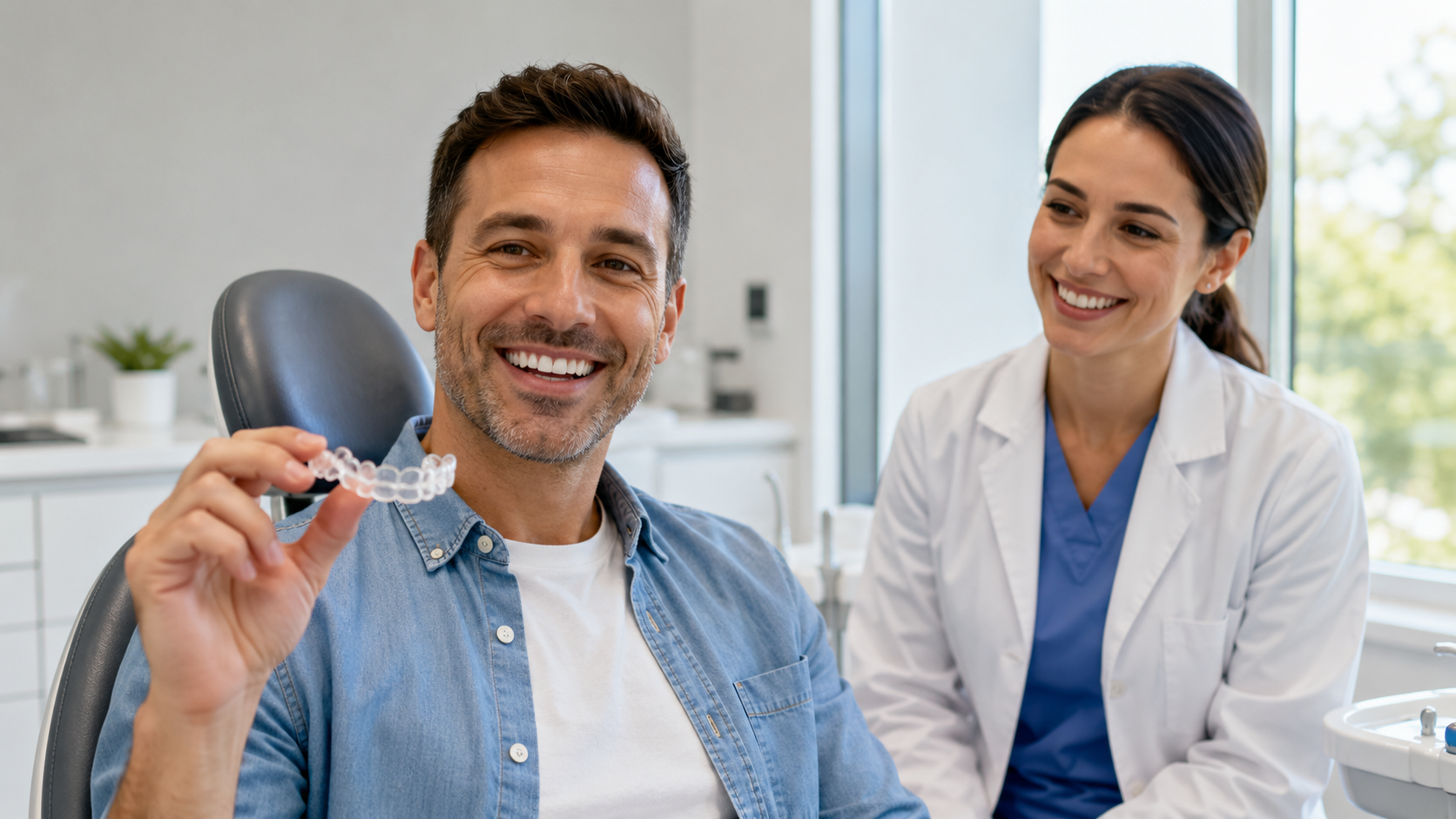
If you have been thinking about straightening your teeth without traditional metal braces, Invisalign may be one of the first options you want to understand. Many adults and teens in North Miami Beach like the idea of clear aligners because they are removable, discreet, and designed to fit into daily life with fewer visual changes than brackets and wires.
At Q Smiles Dentistry in North Miami Beach, patients from North Miami Beach, Golden Glades, North Miami, Aventura, Sunny Isles Beach, Miami Gardens, and nearby Miami communities can ask about clear aligner options during a dental consultation. The goal is not simply to make teeth look straighter. A proper evaluation also looks at your bite, gum health, enamel, spacing, crowding, and whether clear aligners are a responsible choice for your specific mouth.
Invisalign treatment uses a series of custom-made clear trays that apply controlled pressure to gradually move teeth into improved positions. While many patients like the appearance and convenience of clear aligners, they are not the right fit for every case. The best way to know whether you are a candidate is to have an in-person dental exam and a personalized treatment recommendation.
Quick Answer: Is Invisalign a Good Option for a Confident Smile?
Invisalign may be a good option for patients with mild to moderate crowding, spacing, or bite concerns who want a more discreet alternative to traditional braces. The aligners are removable, clear, and custom planned, but they require discipline. Most patients need to wear clear aligners for about 20 to 22 hours per day or as directed by their provider.
Invisalign is not automatically the best choice for every patient. More complex bite issues, severe tooth rotations, active gum disease, untreated cavities, or certain dental conditions may require other treatment first. A dentist can evaluate your oral health and explain whether clear aligners, braces, restorative care, or another approach makes the most sense.
Table of Contents
What Is Invisalign?
Invisalign is a clear aligner system used to gradually move teeth into better alignment. Instead of metal brackets and wires, treatment uses a series of transparent plastic trays that fit over your teeth. Each aligner is slightly different, helping guide the teeth through planned movements over time.
Clear aligners are commonly used for concerns such as crowded teeth, small gaps, mild overlap, and certain bite issues. The exact possibilities depend on the patient’s teeth, jaw relationship, gum health, and treatment goals. Some patients only need minor alignment changes, while others may need a more detailed plan or a different type of orthodontic treatment.
A clear aligner is not the same thing as a whitening tray or a generic mouthguard. It is a custom orthodontic appliance designed from your dental records and treatment plan. Because teeth are being moved, the process should be supervised by a qualified dental professional who can evaluate fit, progress, oral health, and bite changes.
The American Dental Association explains that orthodontic treatment can help correct malocclusion, which refers to crowded, crooked, or misaligned teeth and bite relationships. Invisalign and other clear aligner systems are one way to approach certain alignment concerns, but the right option depends on the individual case.
How Invisalign Works
Invisalign works by applying gentle, controlled pressure through a series of custom aligners. Each set of aligners is designed to move specific teeth a small amount. As you progress through the sequence, your teeth gradually shift toward the planned position.
Step 1: Dental Evaluation
The first step is a dental exam. Your dentist checks your teeth, gums, bite, existing dental work, and overall oral health. This matters because aligner treatment should not begin if there are untreated dental problems that could affect safety or results.
For example, cavities, gum inflammation, bone support concerns, or unstable dental work may need to be addressed first. A healthy foundation helps make orthodontic movement more predictable and comfortable.
Step 2: Digital Planning or Impressions
If clear aligners appear appropriate, the provider gathers records to plan treatment. This may include digital scans, photos, X-rays, bite evaluation, and other diagnostic information. These records help create a custom sequence of aligners.
The plan considers how teeth should move, which teeth need space, whether attachments may be needed, and how the bite should come together. Attachments are small tooth-colored shapes that may be placed on certain teeth to help aligners grip and guide movement more effectively.
Step 3: Wearing Your Aligners
Patients usually wear each aligner set for a prescribed period before moving to the next set. Your dentist will explain your specific instructions. In many clear aligner plans, the aligners must be worn most of the day and night, only being removed for eating, drinking anything other than water, brushing, and flossing.
The American Association of Orthodontists notes that clear aligners are removable, but for best results patients are often instructed to wear them 20 to 22 hours per day or as prescribed by their orthodontic provider.
Step 4: Monitoring Progress
Progress visits are important. Even when the aligners are removable and convenient, professional monitoring helps confirm that teeth are tracking as planned. If an aligner does not fit properly, if teeth are not moving as expected, or if the bite feels off, your provider may need to adjust the plan.
This is one reason dentist-supervised Invisalign treatment is different from trying to move teeth without clinical oversight. Tooth movement affects the gums, bone, roots, bite, and long-term stability of the smile.
Invisalign in North Miami Beach: Who It May Help
Invisalign in North Miami Beach may help patients who want a discreet way to address certain alignment concerns while receiving care from a local dental team. At Q Smiles Dentistry, patients can discuss clear aligners as part of a broader dental care plan that considers both appearance and oral health.
Many patients ask about Invisalign because they feel self-conscious about crooked teeth, crowded teeth, or spaces between teeth. Others are more concerned about function. A misaligned bite can sometimes make cleaning more difficult, place uneven pressure on certain teeth, or contribute to wear patterns. These issues should be evaluated individually.
Clear aligners may be considered for concerns such as:
- Mild to moderate crowding
- Small gaps between teeth
- Minor tooth overlap
- Some bite alignment concerns
- Relapse after previous orthodontic treatment
- Patients who want a less noticeable option than metal braces
However, Invisalign may not be ideal for every situation. Severe crowding, complex bite issues, teeth that need major rotation, or cases that require significant jaw correction may need traditional braces or specialist orthodontic care. The recommendation depends on the exam.
Invisalign vs. Braces
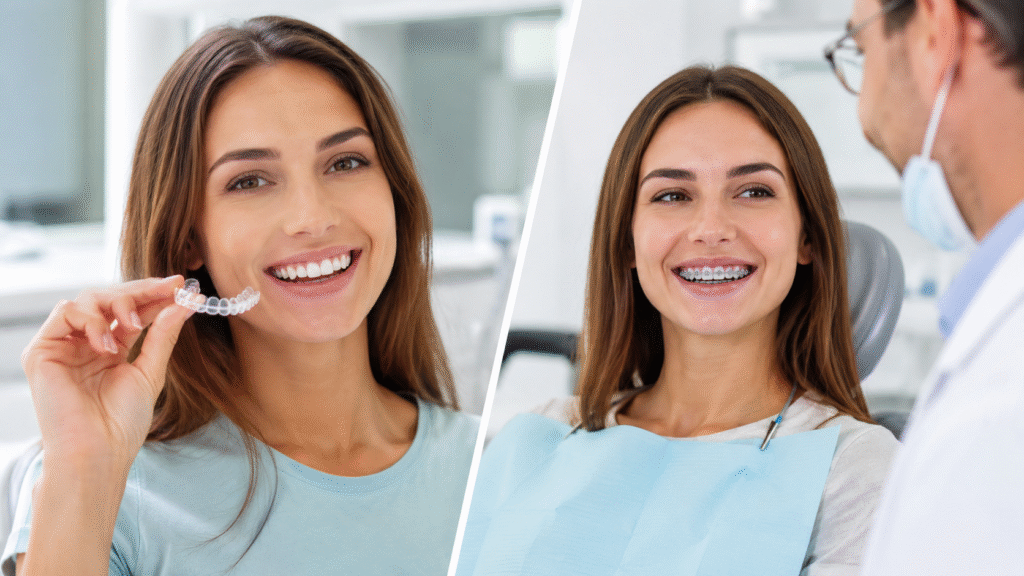
Invisalign and braces both move teeth, but they fit different needs and lifestyles. Invisalign uses removable clear trays, while traditional braces use brackets and wires fixed to the teeth. Both can be effective when properly planned and monitored, but the right choice depends on case complexity, patient discipline, and clinical goals.
| Factor | Invisalign Clear Aligners | Traditional Braces |
|---|---|---|
| Appearance | Clear and more discreet | Visible brackets and wires |
| Removability | Removable for meals, brushing, and flossing | Fixed to the teeth |
| Eating | No food restrictions when aligners are removed | Some sticky, hard, or crunchy foods may need to be avoided |
| Oral hygiene | Brushing and flossing are usually easier because trays are removable | Requires cleaning around brackets and wires |
| Discipline required | High, because aligners must be worn as directed | Lower daily compliance burden because braces stay in place |
| Best for | Many mild to moderate alignment concerns | Simple to complex orthodontic cases |
| Professional monitoring | Needed to check tracking, fit, and bite changes | Needed for adjustments and progress checks |
One of the biggest lifestyle advantages of Invisalign is that the trays can be removed. You can eat normally after taking them out, then brush before putting them back in. That convenience also creates responsibility. If the aligners are left out too long, teeth may not move as planned, treatment may take longer, or refinements may be needed.
Traditional braces may be better for some complex cases because they are fixed and can provide certain types of control that are harder to achieve with removable trays. A dentist can explain whether your case appears suitable for Invisalign or whether another orthodontic option should be considered.
Daily Life With Clear Aligners
Daily life with Invisalign is usually manageable, but it requires consistency. Patients need to build habits around meals, oral hygiene, aligner storage, and wear time. The trays are designed to be discreet, but they only work when worn as prescribed.

Eating and Drinking
You remove Invisalign aligners before eating. This means you do not have the same food limitations associated with traditional braces. However, you should avoid eating with the aligners in place because food can damage or stain them.
Water is usually fine while wearing aligners, but coffee, tea, wine, soda, and colored beverages can stain trays or increase the risk of plaque buildup if trapped against the teeth. For most drinks other than water, remove the aligners first and clean your teeth before reinserting them when possible.
Brushing and Flossing
Clear aligners can make oral hygiene easier than braces because you can remove the trays and brush normally. Still, hygiene becomes even more important. If food particles or sugar are trapped under an aligner, they can sit against the teeth for long periods.
During Invisalign treatment, patients should brush and floss consistently, clean the aligners as directed, and keep up with preventive dental visits. If you are due for a cleaning or exam, Q Smiles Dentistry can help you review your broader dental services in North Miami Beach before starting or continuing aligner care.
Speech and Comfort
Some patients notice a slight lisp or extra saliva when they first start wearing aligners. This usually improves as the mouth adapts. It is also normal to feel pressure when switching to a new set of trays. That pressure is part of the tooth movement process, but significant pain or poor fit should be reported to your provider.
Travel, Work, and Social Life
For many adults in North Miami Beach, Golden Glades, Aventura, and nearby areas, Invisalign fits well into work and social routines. The trays are subtle, and most people will not notice them unless they look closely. The key is planning. Keep your aligner case with you, avoid wrapping trays in napkins, and maintain a brushing routine after meals.
What to Expect During the Invisalign Process
The Invisalign process usually begins with a consultation and continues through planning, aligner wear, progress checks, refinements if needed, and retention. Each case is different, so your dentist will explain the expected timeline and steps based on your diagnosis.
Consultation and Smile Goals
During your consultation, you can talk about what bothers you about your smile. Some patients want to fix crowding in the front teeth. Others want to close a small space, improve alignment before cosmetic treatment, or address shifting that happened years after braces.
Your dentist will also look beyond cosmetic concerns. A healthy smile is about more than straight teeth. The bite, gums, bone support, tooth wear, jaw comfort, and existing restorations all matter.
Custom Treatment Plan
If Invisalign is appropriate, your treatment plan will be customized. This plan may show projected tooth movements and estimated treatment stages. Keep in mind that projections are planning tools, not guarantees. Teeth respond differently from patient to patient, and adjustments may be needed.
Receiving Your Aligners
Once the aligners are ready, your provider will check the fit and explain how to wear and care for them. If attachments are part of your plan, they may be placed on specific teeth. These attachments help the trays apply force in a more controlled way.
Progress Visits and Refinements
Follow-up visits help confirm that the aligners are fitting and the teeth are moving as expected. Sometimes refinements are needed. A refinement is an additional set of aligners used to fine-tune the result after the first planned sequence.
Retention After Invisalign
After Invisalign, retainers are usually needed to help maintain the new tooth positions. Teeth can shift over time, especially without retention. Your dentist will explain how often to wear your retainer and how to care for it.
Who Is a Good Candidate for Invisalign?
A good Invisalign candidate usually has healthy teeth and gums, a treatable alignment concern, and the discipline to wear aligners consistently. Age alone is not the main factor. Adults and teens may be candidates, but oral health and case complexity are more important.
You may be a possible candidate if:
- You want a discreet teeth-straightening option
- You have mild to moderate crowding or spacing
- You can commit to wearing aligners most of the day
- You are willing to brush and floss carefully
- You can attend progress visits
- Your gums and teeth are healthy enough for movement
You may need another approach or dental treatment first if:
- You have untreated cavities
- You have active gum disease
- Your bite issue is complex
- You have teeth that need major movement
- You have dental restorations that require special planning
- You are not likely to wear aligners as directed
This is why an exam is essential. Online information can help you understand Invisalign, but it cannot diagnose your bite or determine whether clear aligners are safe and appropriate for your mouth.
What Affects Invisalign Cost?
The cost of Invisalign depends on the complexity of treatment, number of aligners, length of care, records needed, refinements, and the provider’s recommendation. Q Smiles Dentistry does not need to publish exact treatment pricing in order to give patients a useful starting point. Your final cost depends on your dental exam and personalized treatment plan.
In general, orthodontic treatment costs can vary widely across Miami and South Florida. Factors that may influence cost include:
- How much movement your teeth need
- Whether the case is mild, moderate, or complex
- Whether attachments or refinements are needed
- The number of visits and records required
- Your oral health before treatment starts
- Insurance benefits, if applicable
- Financing options available at the clinic
Q Smiles Dentistry’s About page mentions flexible financing options through Cherry, U.S. Bank, and CareCredit. During a consultation, the team can explain available payment options and help you understand what applies to your situation.
For the most accurate information, schedule an appointment with Q Smiles Dentistry and ask for an Invisalign or clear aligner consultation.
Why Dentist-Supervised Invisalign Matters
Dentist-supervised Invisalign matters because clear aligners move teeth through bone and affect the bite, gums, and long-term oral health. Even though aligners look simple, orthodontic movement is a medical and dental process that should be planned and monitored carefully.
The American Dental Association has expressed concern about direct-to-consumer dental services and self-directed orthodontic treatment because of the potential for harm when treatment is not properly supervised. Peer-reviewed research on direct-to-consumer aligners has also documented adverse events such as bite problems, pain, sensitivity, and periodontal issues.
That does not mean clear aligners are unsafe when properly used. It means the evaluation, planning, and monitoring matter. A dental provider can check whether your teeth and gums are healthy enough, whether the aligners fit correctly, whether your bite is changing appropriately, and whether any part of the plan needs adjustment.
Why Choose Q Smiles Dentistry for Clear Aligners in North Miami Beach?
Q Smiles Dentistry offers local dental care in North Miami Beach with a focus on personalized treatment, bilingual support, and comprehensive dental services. The clinic is located at 68 NE 167th St B, Miami, FL 33162, making it convenient for patients in North Miami Beach, Golden Glades, North Miami, Aventura, Sunny Isles Beach, Miami Gardens, and nearby communities.
One advantage of discussing Invisalign with a comprehensive dental office is that your provider can evaluate your smile as a whole. Some patients need cleanings, fillings, gum care, whitening, cosmetic treatment, or restorative planning before or after aligner treatment. Having those conversations in one place can make the process more coordinated.
Q Smiles Dentistry’s website describes services that include Invisalign, cosmetic dentistry, implants, crowns, root canals, dentures, and routine dental care. If your alignment goals are connected to broader smile goals, you can also learn more about Q Smiles Dentistry and the clinic’s approach to patient care.
For patients with missing teeth or more complex restorative needs, alignment may need to be coordinated with other treatment. In some cases, dental implants, crowns, or dentures are part of the broader plan. If tooth replacement is part of your smile goals, you can review Q Smiles Dentistry’s dental implants and oral surgery services.
When Should You Ask About Invisalign?
You should ask about Invisalign when you notice tooth crowding, spacing, shifting, or bite concerns and want to understand your options. You do not need to know whether you are a perfect candidate before scheduling a consultation. That is what the evaluation is for.
It may be time to ask about clear aligners if:
- You hide your smile in photos
- Your teeth have shifted after past orthodontic treatment
- You have crowding that makes flossing harder
- You have small gaps you want to close
- You want straighter teeth without metal braces
- You are planning cosmetic treatment and want better alignment first
It is also worth asking if you are unsure. Some patients assume their case is too minor to treat, while others assume clear aligners can fix anything. A consultation gives you a more accurate answer.
How to Prepare for an Invisalign Consultation
To prepare for an Invisalign consultation, think about your smile goals, dental history, daily routine, and any concerns you have about treatment. Bringing clear questions can help you get more value from the appointment.
Helpful questions to ask include:
- Am I a good candidate for Invisalign?
- Are my teeth and gums healthy enough to start?
- How many hours per day would I need to wear aligners?
- What happens if my teeth do not track as planned?
- Will I need attachments?
- How long might treatment take in my case?
- Will I need a retainer after treatment?
- Are there financing options available?
You should also tell your dentist about past braces, retainers, jaw discomfort, grinding, gum disease, missing teeth, implants, crowns, veneers, or any major dental work. These details can affect the treatment plan.
Common Invisalign Mistakes to Avoid
The most common Invisalign mistakes are not wearing aligners enough, eating with them in, losing trays, skipping hygiene, and missing progress visits. These habits can affect comfort, fit, timing, and oral health.
Leaving Aligners Out Too Long
Because Invisalign is removable, it is easy to leave trays out after meals or social events. Over time, this can interfere with tooth movement. If you choose clear aligners, wear time must become part of your routine.
Not Cleaning Teeth Before Reinserting Aligners
Putting aligners back over unbrushed teeth can trap food and bacteria. This may increase the risk of plaque buildup, bad breath, staining, and tooth decay. When brushing is not possible, rinse your mouth and clean properly as soon as you can.
Skipping Appointments
Progress checks are part of responsible treatment. Even if everything feels fine, your provider needs to confirm that the aligners fit, the teeth are tracking, and the bite is developing properly.
Assuming Retainers Are Optional
Retainers help protect your result after treatment. Without retention, teeth may gradually shift. If you are investing time and effort into Invisalign, the retainer phase matters.
Invisalign FAQs
Is Invisalign painful?
Invisalign may cause pressure or soreness, especially when switching to a new aligner set. This is usually related to tooth movement. Severe pain, sharp edges, or trays that do not fit should be discussed with your dentist.
How long does Invisalign take?
Treatment time varies. Some minor cases may be shorter, while more involved cases can take longer. Your timeline depends on the amount of tooth movement needed, your oral health, how consistently you wear the aligners, and whether refinements are needed.
Can I eat with Invisalign?
No. You should remove Invisalign aligners before eating. Eating with aligners can damage or stain them. After eating, brush and floss before putting the trays back in whenever possible.
How many hours per day do I need to wear Invisalign?
Many clear aligner plans require 20 to 22 hours of daily wear, or the specific schedule prescribed by your provider. Your dentist will give instructions based on your case.
Is Invisalign better than braces?
Invisalign is better for some patients, while braces are better for others. Clear aligners are discreet and removable, but they require discipline and may not be suitable for complex cases. Braces may be recommended when more control is needed.
Can teens get Invisalign?
Some teens may be candidates for Invisalign if their teeth and bite are appropriate and they can follow wear instructions. A dental evaluation is needed to determine whether clear aligners are a responsible option.
Will Invisalign work if I have crowns, implants, or veneers?
It depends. Crowns and veneers require careful planning, and dental implants do not move like natural teeth. Tell your dentist about all existing dental work before starting clear aligner treatment.
Where can I ask about Invisalign in North Miami Beach?
You can ask about Invisalign at Q Smiles Dentistry, located at 68 NE 167th St B, Miami, FL 33162. Call +1 305-947-6453 or visit the contact page to request an appointment.
Ready to Talk About Invisalign in North Miami Beach?
If you want straighter teeth, a more confident smile, and a discreet alternative to traditional braces, Invisalign may be worth discussing with a dentist. The most important step is finding out whether clear aligners are right for your specific teeth, bite, and oral health.
Q Smiles Dentistry helps patients in North Miami Beach, Golden Glades, North Miami, Aventura, Sunny Isles Beach, Miami Gardens, and nearby Miami communities explore personalized dental options in a welcoming office. Whether you are just starting to research Invisalign or you are ready for a consultation, the team can help you understand your next step.
To begin, call +1 305-947-6453 or schedule an appointment with Q Smiles Dentistry.
Sources
- American Dental Association MouthHealthy: Braces and Orthodontic Treatment
- American Association of Orthodontists: Clear Aligner Therapy
- Cleveland Clinic: Clear Braces
- American Dental Association: Direct-to-Consumer Dental Services Policy
- National Library of Medicine: Clear Aligner Therapy Review
- National Library of Medicine: Adverse Events Related to Direct-to-Consumer Sequential Aligners