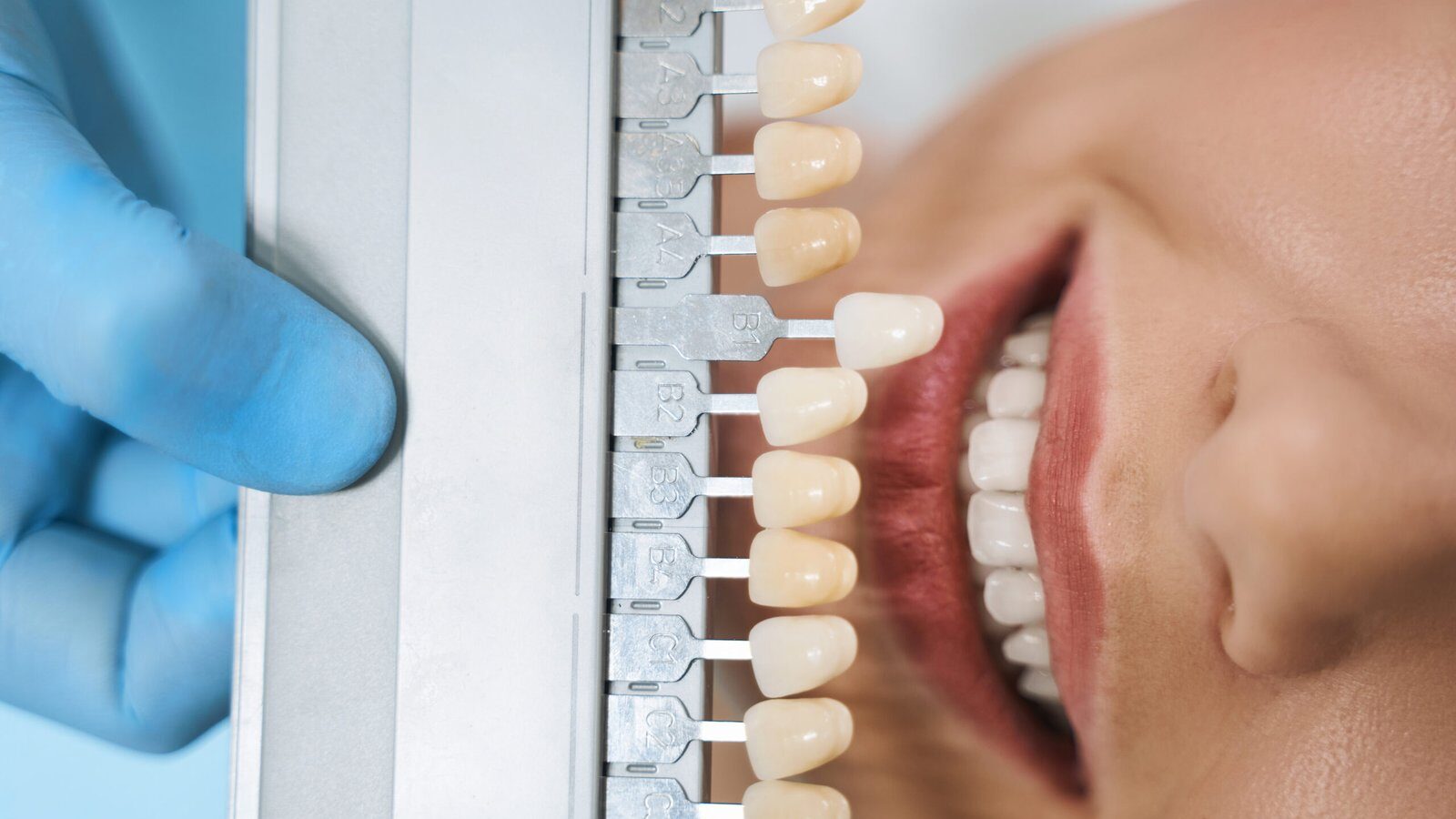
If you have chipped, stained, uneven, worn, or slightly spaced teeth, dental veneers may be one of the cosmetic dentistry options your dentist discusses with you. Veneers are thin, tooth-colored coverings placed on the front surface of selected teeth to improve the shape, shade, size, and overall appearance of your smile.
At Q Smiles Dentistry in North Miami Beach, patients from North Miami Beach, Golden Glades, North Miami, Aventura, Sunny Isles Beach, Miami Gardens, and nearby Miami communities can schedule an exam to find out whether veneers are a good fit for their smile goals and oral health.
This guide explains what dental veneers are, what they can improve, how the process works, how they compare with other cosmetic options, and what patients should know before starting treatment. It is not a substitute for an in-person dental evaluation. The right treatment depends on your teeth, bite, gum health, enamel, goals, and dentist’s recommendation.
Quick Answer: What Are Dental Veneers?
Dental veneers are thin, custom-made shells that cover the front surface of teeth to improve cosmetic concerns such as discoloration, small chips, uneven edges, gaps, worn enamel, or teeth that look slightly misshapen. Porcelain veneers are usually made in a dental lab and are known for their natural appearance and stain resistance. Composite veneers are made from tooth-colored resin and may be completed more quickly in some cases.
Veneers are usually considered a cosmetic treatment, but they still require careful dental planning. Your dentist needs to examine your teeth and gums, check your bite, discuss your goals, and make sure your teeth are healthy enough for treatment.
Table of Contents
What Are Dental Veneers?
Dental veneers are thin coverings bonded to the front of the teeth. Their purpose is to improve the visible appearance of the smile while keeping the result proportional, natural-looking, and personalized to the patient’s face.
The American Dental Association explains that porcelain veneers are thin shells custom-made to fit the front surface of teeth, while composite veneers are made from tooth-colored filling material bonded to the tooth. Both options can improve the appearance of selected teeth, but they differ in durability, stain resistance, preparation, number of visits, and repairability.
Veneers are often used for the teeth that show when you smile. For some patients, that may mean a few upper front teeth. For others, it may involve a more complete smile makeover plan. Your dentist may also discuss whitening, bonding, crowns, Invisalign, or gum treatment depending on your smile goals and oral health.
A veneer is not the same as a crown. A crown covers more of the tooth and is often used when a tooth needs more structural support. A veneer mainly covers the front visible surface and is usually chosen for cosmetic improvement when the tooth is otherwise healthy enough.
What Can Dental Veneers Improve?
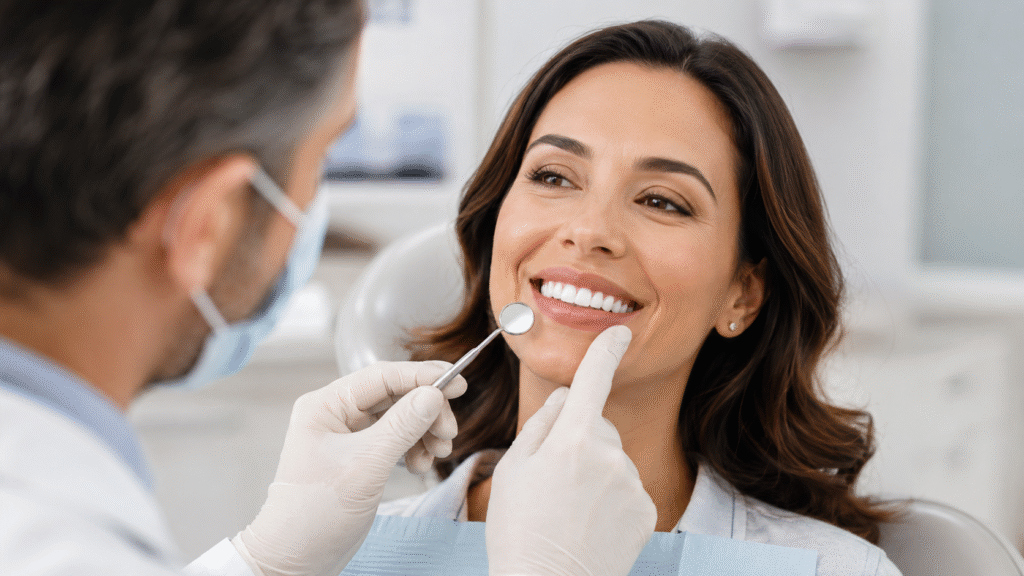
Dental veneers can improve several cosmetic concerns, but they are not the right answer for every tooth or every patient. They are most commonly considered when the concern is appearance rather than major tooth damage, active decay, or severe bite problems.
Stained or discolored teeth
Some tooth discoloration responds well to professional whitening. Other stains are deeper or caused by factors that may not lighten evenly. Veneers can cover the front surface of selected teeth to create a more consistent shade.
This does not mean every patient with stains needs veneers. In many cases, whitening may be a more conservative first step. Your dentist can help you decide whether whitening, bonding, veneers, or another option makes more sense.
Small chips or worn edges
Veneers may improve teeth with small chips, worn edges, or uneven contours. The goal is to create a smoother, more balanced smile while still keeping the result realistic.
If the tooth has a large fracture, significant decay, or a weak structure, a crown or another restorative treatment may be more appropriate than a veneer.
Small gaps between teeth
For some patients, veneers can make small spaces between teeth appear closed. This can be useful when the teeth are otherwise healthy and the bite allows for a stable result.
For larger spacing or bite-related concerns, clear aligners or orthodontic treatment may be recommended before or instead of veneers.
Uneven tooth shape or size
Some people naturally have teeth that look smaller, narrower, slightly pointed, or uneven compared with surrounding teeth. Veneers can be designed to improve tooth proportions and create a more balanced smile line.
Good veneer planning should consider more than just tooth color. Shape, gum line, facial proportions, lip movement, bite, and neighboring teeth all matter.
Minor cosmetic misalignment
Veneers may improve the appearance of teeth that look slightly rotated or uneven. However, they do not physically move teeth the way orthodontic treatment does.
If teeth are crowded, the bite is unstable, or alignment could affect long-term results, your dentist may recommend Invisalign or another orthodontic option first.
Types of Dental Veneers
The two most common categories patients hear about are porcelain veneers and composite veneers. There may also be “no-prep” or minimal-prep veneer options in some cases, but suitability depends on the tooth shape, enamel, bite, and desired result.
Porcelain veneers
Porcelain veneers are thin ceramic shells custom-made to fit the front surface of the teeth. They are designed to reflect light in a way that can look very similar to natural enamel. They are often selected for patients who want a long-lasting cosmetic result and a high level of shade stability.
Porcelain veneers typically require planning, tooth preparation in many cases, impressions or scans, temporary veneers when appropriate, and final bonding once the lab-made veneers are ready.
Because some enamel may be removed, porcelain veneers are often considered an irreversible treatment. That is why planning, communication, and a realistic understanding of the process are important.
Composite veneers
Composite veneers are made from tooth-colored resin material that is shaped and bonded to the tooth. Composite resin is also used in many tooth-colored restorations because its shade can be customized to match surrounding teeth.
Composite veneers may require less enamel removal in some cases and may be completed faster than porcelain veneers. They can also be easier to repair if chipped. However, composite is generally not as stain-resistant or wear-resistant as porcelain.
No-prep or minimal-prep veneers
Some patients ask about no-prep veneers because they sound more conservative. In some cases, a dentist may be able to place very thin veneers with little or no enamel removal. However, this is not possible for every smile.
No-prep veneers can look bulky if the teeth are already large, crowded, or angled forward. A careful dental exam is needed to determine whether this approach would create a natural-looking result.
The Dental Veneers Process
The dental veneers process usually begins with a consultation and oral health exam, followed by treatment planning, preparation when needed, impressions or digital scans, temporary veneers in some cases, and final bonding. The exact process depends on the type of veneer and the patient’s treatment plan.
1. Consultation and smile goals
Your first visit is about understanding what you want to improve and whether veneers are a healthy option. The dentist may ask what you dislike about your smile, what kind of result you prefer, and whether you want a subtle or more noticeable change.
This is also the time to discuss concerns like sensitivity, grinding, previous dental work, missing teeth, gum recession, or bite issues. A cosmetic treatment should be planned around oral health, not separately from it.
2. Dental exam and treatment planning
Your dentist will evaluate your teeth, gums, enamel, bite, and existing restorations. X-rays or other records may be recommended if needed. If there are cavities, gum disease, or other dental concerns, those may need to be treated before veneers.
At Q Smiles Dentistry, patients can explore cosmetic and restorative options by visiting the clinic’s dental services in North Miami Beach page or scheduling a personal visit for a more specific recommendation.
3. Shade, shape, and smile design
Veneers should not be planned as one standard “perfect smile.” A natural-looking result depends on choosing the right shade, length, shape, and proportions for your face.
Some patients want a brighter smile. Others want a natural improvement that still looks like them. The best planning process should include a conversation about expectations, limitations, and maintenance.
4. Tooth preparation, if needed
For many porcelain veneers, a small amount of enamel may be removed so the veneer can fit naturally and not look bulky. The amount varies based on the tooth position, veneer material, and treatment goals.
Because enamel does not grow back, patients should understand the commitment before moving forward. Your dentist should explain what is being removed, why it is needed, and what alternatives may be available.
5. Impressions, scans, and temporary veneers
After preparation, impressions or digital scans may be taken so the veneers can be made to fit your teeth. Temporary veneers may be placed in some cases while the final veneers are being made.
Temporary veneers can help protect prepared teeth and give you a general preview of the new shape, although they are not the same as the final porcelain result.
6. Final bonding
At the bonding visit, the dentist checks the fit, shape, shade, and bite before permanently bonding the veneers. Adjustments may be made before final placement.
Once bonded, veneers become part of your smile. You will still need daily brushing, flossing, regular dental visits, and healthy habits to help protect them.
Dental Veneers vs Other Cosmetic Options

Veneers are only one option in cosmetic dentistry. Depending on your goals, your dentist may recommend whitening, bonding, crowns, Invisalign, implants, or a combination of treatments.
The right option depends on whether the concern is color, shape, alignment, missing teeth, tooth strength, bite, or overall smile balance.
| Option | Best For | What It Changes | Important Consideration |
|---|---|---|---|
| Dental veneers | Stains, chips, small gaps, uneven shape, worn edges | Front surface appearance of selected teeth | Porcelain veneers often require enamel removal and are usually not reversible |
| Teeth whitening | General tooth discoloration that responds to bleaching | Tooth shade | Does not change tooth shape, size, chips, or gaps |
| Dental bonding | Small chips, minor gaps, small shape corrections | Uses tooth-colored resin to reshape or repair areas | May stain or wear faster than porcelain veneers |
| Dental crowns | Teeth with larger damage, weakness, or extensive restorations | Covers more of the tooth structure | More tooth coverage than a veneer and usually used when strength is a concern |
| Clear aligners | Crowding, spacing, bite alignment, tooth position | Moves teeth gradually | Does not directly change tooth color or shape |
| Dental implants | Missing teeth | Replaces missing tooth roots and supports a restoration | Used for tooth replacement, not for covering existing front teeth |
Veneers vs bonding
Bonding and veneers can both improve chips, gaps, shape, and discoloration. Bonding uses composite resin placed directly on the tooth. It may be more conservative and faster in some cases, but it may not last as long or resist stains as well as porcelain.
Veneers may be better for patients who want a more comprehensive cosmetic change across multiple visible teeth. Bonding may be better for smaller corrections or patients who want a more conservative option.
Veneers vs crowns
A veneer covers the front of the tooth. A crown covers much more of the tooth. If a tooth is structurally weak, cracked, heavily filled, or has significant decay, a crown may be a better restorative option.
If the tooth is healthy and the concern is mainly cosmetic, a veneer may be considered. Your dentist will help determine which option protects the tooth best.
Veneers vs whitening
Whitening changes tooth color but does not change tooth shape. Veneers can change color, shape, length, and symmetry, but they require more planning and may involve enamel preparation.
Some patients whiten their natural teeth first, then match veneers to the new shade. This can be especially important when only some front teeth are receiving veneers.
Veneers vs Invisalign
Veneers can make teeth look more even, but they do not move teeth. Invisalign and other clear aligners gradually shift tooth position and may be recommended when alignment or bite is the main concern.
In some smile makeovers, orthodontic treatment is completed first, then veneers are used later for shape or shade improvements.
Who May Be a Good Candidate for Dental Veneers?
A good candidate for dental veneers is usually someone with healthy teeth and gums who wants to improve cosmetic concerns on the visible front teeth. However, the only way to know if veneers are appropriate is through an exam.
You may be a potential candidate if you have:
- Discoloration that does not respond well to whitening
- Small chips or worn tooth edges
- Small spaces between front teeth
- Uneven tooth size or shape
- Minor cosmetic misalignment
- Healthy gums and enough enamel for bonding
- Realistic expectations about the process and maintenance
Veneers may not be recommended right away if you have untreated cavities, active gum disease, severe grinding, major bite problems, very thin enamel, or teeth that need structural support. In those situations, your dentist may recommend other treatments first.
If you grind or clench your teeth, your dentist may discuss a nightguard after veneers are placed. Grinding can place extra force on veneers and increase the risk of chips or damage.
What Affects the Cost of Dental Veneers?
The cost of dental veneers can vary across Miami and South Florida because treatment depends on several personal factors. Q Smiles Dentistry does not provide a one-size-fits-all price in this guide because the final cost depends on an in-person exam and treatment plan.
Factors that can affect veneer cost include:
- The number of teeth being treated
- Whether porcelain or composite veneers are recommended
- The complexity of the smile design
- Whether tooth preparation is needed
- Whether temporary veneers are used
- The condition of the teeth and gums before treatment
- Whether other treatments are needed first, such as cleaning, whitening, fillings, gum care, or orthodontics
- The materials and lab work involved
Because veneers are often cosmetic, insurance coverage may be limited. Patients should review their dental benefits and ask the dental office about payment options, if available.
The best next step is to schedule an appointment with Q Smiles Dentistry so the dentist can evaluate your smile and explain your options.
How to Care for Dental Veneers
Dental veneers still require daily care, regular checkups, and healthy habits. Even though the veneer covers the front of the tooth, the natural tooth and gums around it still need protection.
Brush and floss every day
Brush twice a day and floss daily around your veneers and natural teeth. Plaque can still collect at the gumline and between teeth. Cavities can still develop in areas of exposed natural tooth structure.
Keep regular dental visits
Routine dental visits help your dentist monitor your veneers, gums, bite, and overall oral health. Professional cleanings also help maintain a healthy foundation for cosmetic dental work.
Avoid using teeth as tools
Do not use your teeth to open packages, bite fingernails, chew ice, or hold objects. These habits can damage veneers and natural teeth.
Protect your smile if you grind your teeth
If you grind or clench, ask your dentist whether a nightguard is recommended. A custom nightguard can help reduce stress on veneers and other dental work.
Be mindful of stains
Porcelain veneers are known for better stain resistance than composite veneers, but surrounding natural teeth can still stain. Coffee, tea, red wine, tobacco, and certain foods may affect the overall smile appearance over time.
Dental Veneers in North Miami Beach
If you are considering dental veneers in North Miami Beach, local access matters. Veneers are not just a single appointment decision. They often involve consultation, planning, preparation, placement, and follow-up care.
Q Smiles Dentistry is located at 68 NE 167th St B, Miami, FL 33162, serving patients in North Miami Beach and nearby areas such as Golden Glades, North Miami, Aventura, Sunny Isles Beach, Miami Gardens, and surrounding Miami communities.
Patients interested in veneers can also learn more about Q Smiles Dentistry and the clinic’s approach to patient care before scheduling a visit.
During your appointment, the dentist can review whether veneers are appropriate or whether another cosmetic or restorative option may be better for your goals. For patients with missing teeth or oral surgery needs, Q Smiles also provides information about dental implants and oral surgery services.
When Veneers May Be Part of a Complete Smile Makeover
A smile makeover can include one treatment or a combination of treatments. Veneers may play an important role when the main concerns involve tooth color, shape, small chips, worn edges, or uneven proportions.
However, a complete smile makeover may also involve:
- Professional teeth whitening before veneers
- Dental bonding for smaller corrections
- Clear aligners for tooth position
- Crowns for teeth needing more support
- Dental implants for missing teeth
- Gum treatment if inflammation or gumline concerns are present
- Regular cleanings and preventive care to maintain the result
The most natural results often come from planning the full smile, not just choosing the whitest shade. A good cosmetic plan should respect your facial features, gumline, bite, and personal preferences.
Important Questions to Ask Before Getting Veneers
Before starting treatment, patients should feel comfortable asking questions. Veneers can be a meaningful investment in your smile, and you should understand the process before making a decision.
Helpful questions include:
- Am I a good candidate for veneers?
- Would whitening, bonding, Invisalign, or crowns be better for my goals?
- How many teeth should be treated for a balanced result?
- Will any enamel need to be removed?
- Are the veneers reversible?
- What material do you recommend and why?
- How should I care for my veneers?
- Do I need a nightguard?
- What can I realistically expect my final smile to look like?
A trustworthy consultation should include both benefits and limitations. Veneers can create a beautiful cosmetic improvement for the right patient, but they should be planned carefully and ethically.
Benefits and Limitations of Dental Veneers
Dental veneers can be an excellent option for selected cosmetic concerns, but every treatment has benefits and limitations.
Potential benefits
- Can improve tooth color, shape, length, and symmetry
- Can cover certain stains that may not respond well to whitening
- Can create a more balanced smile appearance
- Porcelain veneers can look natural and resist staining better than composite
- Can be customized to match the patient’s preferred smile style
Potential limitations
- Porcelain veneers often require some enamel removal
- Many veneer treatments are not reversible
- Veneers can chip, loosen, or need replacement over time
- They may not be appropriate for unhealthy teeth or gums
- They do not replace orthodontic treatment when tooth movement is needed
- They are often considered cosmetic and may not be covered by insurance
The best way to understand the benefits and limitations in your case is to schedule an exam and discuss your goals with a dentist.
Ready to Talk About Your Smile?
If you are interested in dental veneers in North Miami Beach, Q Smiles Dentistry can help you understand your options and decide whether veneers, whitening, bonding, Invisalign, crowns, or another treatment best fits your goals.
To take the next step, schedule an appointment with Q Smiles Dentistry. The team can evaluate your oral health, discuss your smile goals, and recommend a personalized treatment plan.
Dental Veneers FAQ
Are dental veneers permanent?
Porcelain veneers often require some enamel removal, which means they are usually considered irreversible. Once enamel is removed, the tooth will likely always need a veneer or another restoration. Composite veneers may be more conservative in some cases, but the right option depends on your teeth and treatment plan.
Do veneers damage your natural teeth?
Veneers should be planned and placed by a licensed dentist after a proper exam. Some enamel may be removed for porcelain veneers, so the treatment should be carefully considered. Good oral hygiene and regular dental visits are still needed to protect the natural tooth structure around the veneer.
Can veneers fix crooked teeth?
Veneers can improve the appearance of minor cosmetic unevenness, but they do not move teeth. If teeth are crowded, rotated, or the bite is not stable, clear aligners or orthodontic treatment may be recommended before or instead of veneers.
Are porcelain veneers better than composite veneers?
Neither option is automatically better for every patient. Porcelain veneers are often more stain-resistant and durable, while composite veneers may require less tooth preparation and may be easier to repair. Your dentist can recommend the best option based on your goals, enamel, budget, timeline, and oral health.
How many veneers do I need?
The number of veneers depends on how many teeth show when you smile, your goals, and the balance between treated and untreated teeth. Some patients need one or two veneers for specific teeth. Others choose several veneers for a broader smile makeover.
Can I whiten veneers?
Veneers do not whiten the same way natural teeth do. If you want a brighter smile, your dentist may recommend whitening your natural teeth before selecting the veneer shade. This helps create a more consistent final result.
What happens if a veneer chips or comes loose?
Contact your dentist as soon as possible. Do not try to glue it back yourself. Depending on the situation, the veneer may be repaired, rebonded, or replaced. The best solution depends on the material and the condition of the tooth.
Where can I get dental veneers in North Miami Beach?
Q Smiles Dentistry provides dental care in North Miami Beach at 68 NE 167th St B, Miami, FL 33162. Patients from Golden Glades, North Miami, Aventura, Sunny Isles Beach, Miami Gardens, and nearby Miami communities can contact the office at +1 305-947-6453 or visit the contact page to request an appointment.
Conclusion: Are Dental Veneers Right for Your Smile?
Dental veneers can be a strong cosmetic option for patients who want to improve tooth color, shape, small chips, worn edges, minor gaps, or overall smile symmetry. They can be especially helpful when the teeth are healthy enough for treatment and the patient wants a personalized smile makeover.
However, veneers are not right for everyone. Some patients may benefit more from whitening, bonding, Invisalign, crowns, implants, gum care, or a combination of treatments. The safest way to decide is through an in-person dental evaluation.
If you are considering dental veneers in North Miami Beach, schedule an appointment with Q Smiles Dentistry. The team can review your smile, answer your questions, and help you choose an option that fits your oral health and cosmetic goals.