
If you are looking into Clear Aligners, you may be wondering how much they can actually fix. Can they straighten crowded teeth? Can they close gaps? Can they improve bite problems like an overbite, underbite, or crossbite? The honest answer is that clear aligners can help many mild to moderate alignment concerns, but they are not the right solution for every case.
At Q Smiles Dentistry in North Miami Beach, patients can ask about clear aligners as part of a personalized dental evaluation. The clinic serves patients from North Miami Beach, Golden Glades, North Miami, Aventura, Sunny Isles Beach, Miami Gardens, and nearby Miami communities.
Clear aligner treatment is not only about making teeth look straighter. A responsible treatment plan also considers your bite, gums, bone support, oral hygiene, enamel, existing dental work, and long-term stability. That is why an in-person exam is the best way to know whether clear aligners are appropriate for your specific smile.
Quick Answer: Can Clear Aligners Fix Crowding, Gaps, and Bite Problems?
Clear aligners can often help mild to moderate crowded teeth, small gaps between teeth, and some bite problems, but they cannot fix every orthodontic issue. The best candidates usually have healthy teeth and gums, alignment concerns that can be corrected with controlled tooth movement, and the discipline to wear aligners as directed.
Clear aligners may be a good option for patients who want a more discreet alternative to metal braces. However, severe crowding, large gaps caused by missing teeth, complex bite problems, jaw growth issues, or cases that require major tooth movement may need braces, restorative treatment, oral surgery, or specialist orthodontic care.
The most important step is a dental evaluation. Your dentist can check whether your teeth are crowded because of limited space, whether gaps are cosmetic or bite-related, and whether your bite problem is simple enough for clear aligner treatment.
Table of Contents
What Are Clear Aligners?
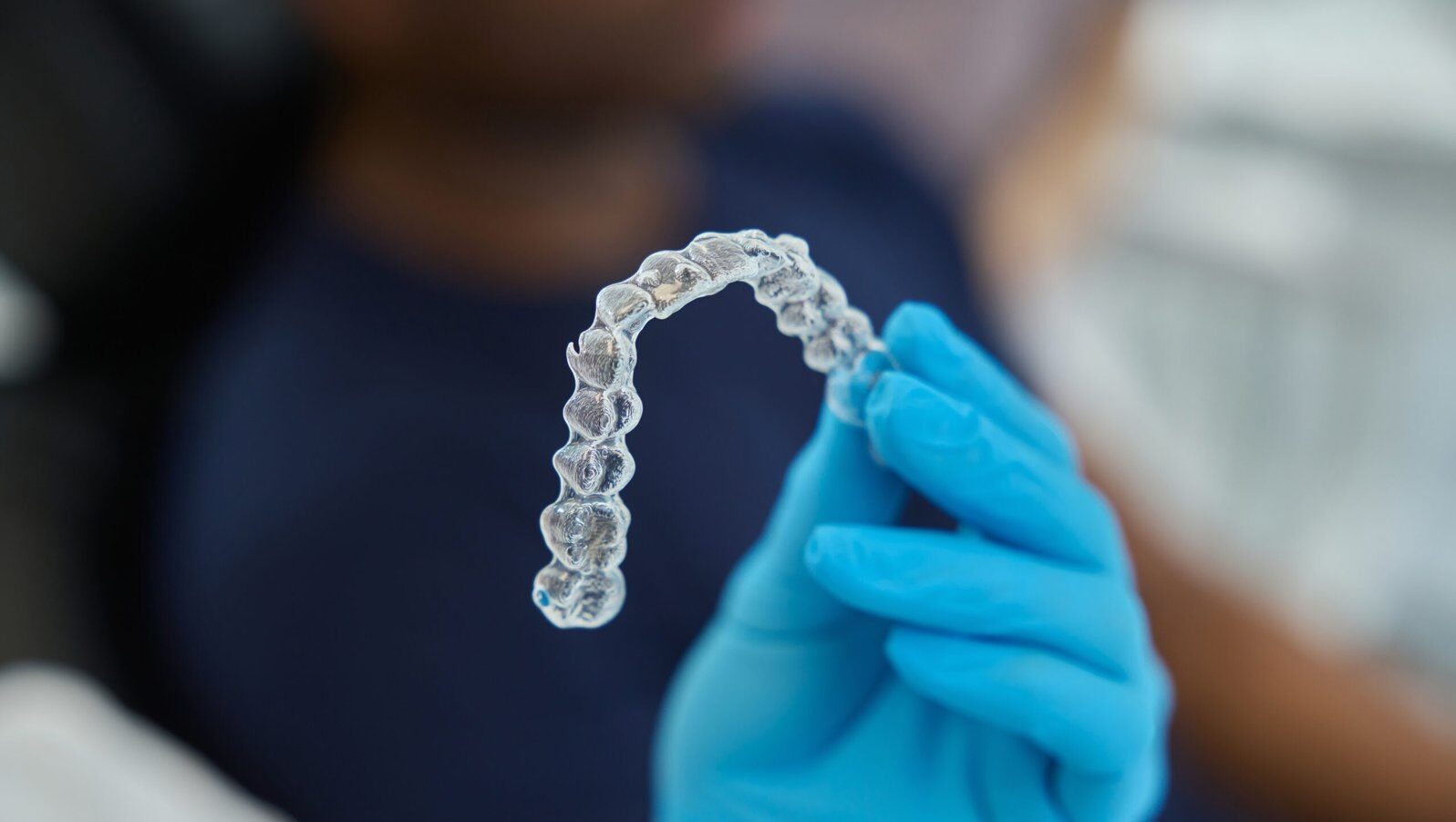
Clear aligners are removable, transparent trays designed to gradually move teeth into better positions. They are custom-made to fit over your teeth and are typically worn in a sequence. Each set applies gentle pressure to guide specific tooth movements.
Unlike traditional braces, clear aligners do not use metal brackets and wires. Patients remove them for eating, brushing, and flossing. This makes them appealing for adults and teens who want a more discreet orthodontic option.
Clear aligners are often associated with Invisalign, one of the most recognized clear aligner systems. Q Smiles Dentistry lists Invisalign as a service for patients who want to straighten teeth discreetly with clear aligners and custom treatment planning.
The American Association of Orthodontists explains that clear aligners are plastic replicas of a patient’s teeth that apply gentle pressure to reposition them. This makes them a useful tool for certain types of orthodontic treatment, but the outcome depends on diagnosis, planning, compliance, and case complexity.
Can Clear Aligners Fix Crowded Teeth?
Clear aligners can often help mild to moderate crowded teeth when there is enough room to move the teeth safely. Crowding happens when the teeth do not have enough space to line up properly. Teeth may overlap, rotate, tilt, or appear pushed forward or backward.
Crowded teeth are not only a cosmetic concern. They can make brushing and flossing more difficult because tight or overlapping areas are harder to clean. When plaque builds up in those spaces, it may increase the risk of cavities, gum inflammation, and bad breath.
Clear aligners may help crowded teeth by gradually guiding teeth into a better arrangement. Depending on the case, the treatment plan may involve creating small amounts of space, widening the arch slightly, moving teeth into more efficient positions, or adjusting tooth angles.
What Types of Crowding May Be Suitable?
Clear aligners may be considered for:
- Mild overlapping of front teeth
- Moderate crowding where teeth can be moved predictably
- Teeth that shifted after previous braces
- Minor rotations or tilting
- Crowding that affects smile appearance and hygiene
The key question is whether there is enough space and control to move the teeth safely. Some patients may need attachments, which are small tooth-colored shapes placed on certain teeth to help the aligners grip and move them more effectively.
When Crowding May Be Too Complex
Severe crowding may require treatment beyond clear aligners alone. If teeth are extremely overlapped, blocked out of the arch, severely rotated, or impacted, braces or orthodontic specialist care may be more appropriate.
In some cases, extractions or other procedures may be part of an orthodontic plan. This does not mean clear aligners are never possible in complex cases, but it does mean the decision should be made after a thorough exam and professional treatment planning.
Image Placeholder: Internal Image 1
Image placement: Place inside the crowded teeth section after the explanation of mild to moderate crowding.
Section relevance: This image supports the crowded teeth section by showing a dentist explaining how limited space and tooth overlap are evaluated before clear aligner treatment.
Suggested file name: clear-aligners-crowded-teeth-planning.jpg
Alt text: Clear Aligners planning for crowded teeth in North Miami Beach
Image generation prompt: Stock photography style image of a dentist using a dental model and tablet scan to explain crowded front teeth to an adult patient, clear aligner tray visible on the consultation table, bright modern dental office, patient focused and curious, dentist calmly pointing to overlapping teeth on the model, professional educational tone, no text, no graphics, no logos, no infographic elements, no before-and-after clinical photos, realistic dental office photography, clean, bright, modern, directly relevant to crowded teeth treatment planning.
Can Clear Aligners Close Gaps Between Teeth?
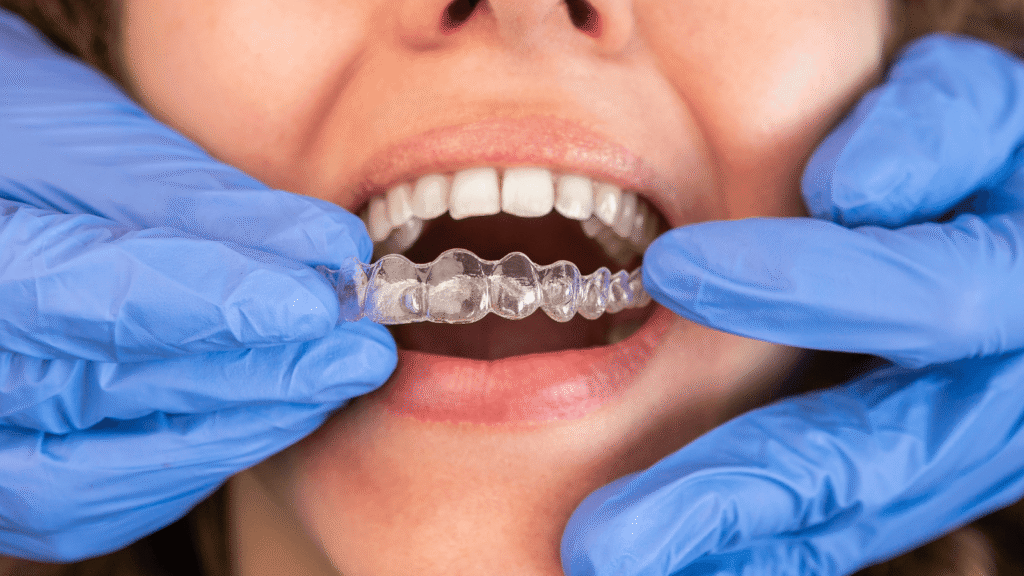
Clear aligners can often close small to moderate gaps between teeth, but the cause of the spacing matters. Gaps may appear between the front teeth, throughout the smile, or in areas where teeth are undersized, missing, tilted, or positioned incorrectly.
Some gaps are mostly cosmetic. Others are connected to bite problems, gum support, missing teeth, tooth size differences, tongue habits, or jaw size. Closing the space without understanding the cause may lead to relapse or an unstable result.
Clear aligners can move teeth closer together in many spacing cases. They may also be used before cosmetic dentistry, such as bonding or veneers, when the goal is to place teeth in a better position before improving shape or proportion.
Types of Gaps Clear Aligners May Help
Clear aligners may be considered for:
- Small spaces between front teeth
- Generalized spacing between several teeth
- Spacing caused by mild tooth positioning issues
- Gaps that appeared after teeth shifted
- Some cases where alignment is needed before cosmetic work
When Gaps Need a Different Plan
If a gap is caused by a missing tooth, an undersized tooth, gum disease, or an unusual bite pattern, clear aligners alone may not be enough. In these situations, the treatment plan may include restorative dentistry, cosmetic bonding, crowns, veneers, implants, or gum treatment.
For example, if a patient has a missing tooth, simply moving nearby teeth may not be the best solution. A dentist may need to discuss space management, tooth replacement, and long-term bite stability. If tooth replacement is part of the larger plan, Q Smiles Dentistry also provides dental implants and oral surgery services.
Can Clear Aligners Fix Bite Problems?
Clear aligners can help some bite problems, especially mild to moderate cases, but complex bite issues may require braces or specialist orthodontic care. A bite problem means the upper and lower teeth do not meet in an ideal way.
Common bite problems include overbite, underbite, crossbite, open bite, crowding-related bite imbalance, and spacing-related bite concerns. The American Association of Orthodontists identifies crowding, spacing, overbite, underbite, crossbite, and open bite as common orthodontic concerns.
Clear aligners may improve certain bite relationships by moving teeth into better positions. However, some bite problems involve jaw position, growth patterns, severe tooth movement, or skeletal imbalance. These cases need careful evaluation.
Overbite
An overbite means the upper front teeth overlap the lower front teeth more than ideal. Some overbite cases may be improved with clear aligners, especially when the issue is tooth-position related. More severe overbites may require additional orthodontic mechanics or a different treatment approach.
Underbite
An underbite happens when the lower front teeth sit ahead of the upper front teeth. Mild dental underbite cases may sometimes be treated with clear aligners, but skeletal underbites related to jaw position can be more complex.
Crossbite
A crossbite occurs when some upper teeth bite inside the lower teeth. Depending on the teeth involved and the severity, clear aligners may help certain crossbite cases. Untreated crossbites can sometimes contribute to uneven wear or bite stress, so an evaluation is important.
Open Bite
An open bite means the upper and lower teeth do not touch properly in a certain area when the mouth is closed. Some mild open bite cases may respond to clear aligners, while more complex cases may require a broader orthodontic plan.
Clear Aligners by Dental Concern
The table below gives a general overview of when clear aligners may help and when another option may be needed. This is not a diagnosis. Your dentist must evaluate your teeth, gums, bite, X-rays, and goals before recommending treatment.
| Dental Concern | Can Clear Aligners Help? | What the Dentist Needs to Check | When Another Option May Be Needed |
|---|---|---|---|
| Crowded teeth | Often, for mild to moderate crowding | Available space, tooth rotations, gum health, bite | Severe crowding, impacted teeth, major rotations |
| Gaps between teeth | Often, for small to moderate spaces | Cause of spacing, tooth size, missing teeth, gum support | Missing teeth, undersized teeth, gum disease, restorative needs |
| Overbite | Sometimes, especially mild to moderate dental overbite | Depth of bite, tooth position, jaw relationship | Severe bite depth or skeletal imbalance |
| Underbite | Sometimes, in selected mild dental cases | Jaw position, front tooth relationship, growth pattern | Skeletal underbite or severe jaw discrepancy |
| Crossbite | Sometimes, depending on location and severity | Which teeth are involved, jaw width, bite stability | Severe crossbite or skeletal expansion needs |
| Open bite | Sometimes, in selected mild to moderate cases | Tongue habits, tooth position, bite contact, jaw pattern | Complex open bite or habit-related relapse risk |
When Clear Aligners May Not Be Enough
Clear aligners may not be enough when the problem is too complex, when the teeth or gums are not healthy enough, or when the bite requires more control than aligners can provide. This is why the consultation matters.
Clear aligners may not be the best first option if you have:
- Active gum disease
- Untreated cavities
- Severe tooth crowding
- Large tooth rotations
- Impacted teeth
- Missing teeth that need replacement planning
- Complex jaw-related bite problems
- Poor oral hygiene habits
- Difficulty wearing aligners for the required time
In some cases, a patient may still be a candidate after other dental work is completed. For example, a dentist may recommend treating cavities, improving gum health, replacing missing teeth, or stabilizing existing dental work before beginning aligner treatment.
Clear aligner treatment is also highly dependent on compliance. Since aligners are removable, the patient plays a major role. If the trays are not worn as instructed, the teeth may not track properly, treatment may take longer, or the plan may need to be revised.
Image Placeholder: Internal Image 2
Image placement: Place inside the section about when clear aligners may not be enough.
Section relevance: This image supports the treatment limitation section by showing a dentist reviewing diagnostic records before deciding whether aligners are appropriate or if another treatment path is needed.
Suggested file name: clear-aligner-diagnostic-review-bite-problems.jpg
Alt text: Dentist reviewing bite problems before Clear Aligners treatment
Image generation prompt: Stock photography style image of a dentist reviewing dental X-rays, a digital bite scan, and a clear aligner tray with an adult patient during a treatment planning consultation, representing evaluation of complex bite problems before clear aligner treatment, bright modern dental office, patient thoughtful and engaged, dentist explaining options carefully, professional and trustworthy tone, no text, no graphics, no logos, no infographic elements, no before-and-after clinical photos, realistic dental office photography, clean, bright, modern, directly relevant to deciding whether aligners are enough.
What the Clear Aligner Process Looks Like
The clear aligner process usually includes a consultation, oral health evaluation, digital planning, custom aligners, progress checks, refinements if needed, and retainers after treatment. Your exact process depends on your case.
1. Consultation and Exam
The dentist begins by listening to your concerns. You may be bothered by crowded front teeth, a gap, shifting after braces, or a bite that does not feel right. The dentist then evaluates your teeth, gums, bite, and existing dental work.
This exam is important because clear aligners should not begin if there are untreated problems that could affect treatment. Healthy gums and stable teeth create a better foundation for orthodontic movement.
2. Records and Treatment Planning
If clear aligners appear appropriate, the dental team may gather records such as photos, scans, X-rays, and bite information. These records help create the treatment plan.
The plan maps how teeth may move over time. It may also show whether attachments, space creation, or refinements are expected. Treatment planning should be realistic and based on what can be done safely.
3. Wearing the Aligners
Once your aligners are made, the dentist checks the fit and gives instructions. Most clear aligner systems require patients to wear trays most of the day and night, removing them for meals, brushing, and flossing.
The American Association of Orthodontists explains that clear aligners are removable, but they must be worn as prescribed to be effective. Many patients are instructed to wear them around 20 to 22 hours per day, depending on the provider’s recommendation.
4. Progress Visits
Follow-up visits help confirm that the aligners are fitting well and that the teeth are moving as expected. These visits are also a chance to ask questions about discomfort, hygiene, tracking, attachments, or treatment timing.
5. Refinements and Retainers
Some patients need refinements, which are additional aligners used to improve the final result. After treatment, retainers are usually needed to help maintain tooth position. Without retainers, teeth may gradually shift again.
Who Is a Good Candidate for Clear Aligners?
A good candidate for clear aligners usually has mild to moderate alignment concerns, healthy teeth and gums, and the ability to wear aligners consistently. Clear aligners can be convenient, but they require discipline.
You may be a possible candidate if:
- You have mild to moderate crowded teeth
- You have small to moderate gaps
- Your bite concern is not severe
- Your gums are healthy enough for tooth movement
- You can keep up with brushing and flossing
- You can wear aligners as directed
- You want a discreet orthodontic option
You may need additional treatment or another option if:
- You have active gum disease
- You have untreated decay
- Your bite problem is complex
- You have missing teeth that affect spacing
- You have restorations that require special planning
- You are unlikely to wear aligners consistently
Clear aligners are not only a cosmetic decision. Teeth move through bone, and that movement affects the bite, gums, roots, and long-term stability of the smile. A dentist-supervised plan helps reduce unnecessary risk and keeps treatment grounded in your actual oral health.
Clear Aligners vs. Braces: Which Is Better?
Clear aligners are better for some patients, while braces are better for others. Clear aligners are removable, discreet, and easier to clean around. Braces are fixed to the teeth and may provide more control in complex cases.
Patients often prefer clear aligners because they are less visible and can be removed for eating. This means there are usually fewer food restrictions than with braces. Oral hygiene may also be easier because you can brush and floss without brackets and wires in the way.
However, braces may be more appropriate when teeth need significant movement or when the patient may not wear removable trays consistently. Since braces stay on the teeth, they do not depend on the same level of daily wear discipline.
A good treatment recommendation is not based only on appearance. It should be based on what will move the teeth safely and predictably in your specific case.
How Clear Aligners Affect Daily Life
Clear aligners are designed to fit into daily life, but they require routine and consistency. Patients need to remove them before eating, clean their teeth before reinserting them, and store them safely when not wearing them.
Most patients adapt to speaking with aligners after a short adjustment period. Some notice temporary pressure or soreness when switching to a new set. That pressure is common with orthodontic movement, but sharp pain, poor fit, or trays that do not seat properly should be discussed with the dentist.
Eating habits also change slightly. You should not eat with aligners in place. You should also be careful with drinks that may stain trays or expose teeth to sugar while the aligners are covering them. Water is usually the safest drink while wearing aligners.
Because clear aligners are removable, it is easy to misplace them. Always use the aligner case instead of wrapping trays in a napkin. Lost or damaged trays can interrupt treatment.
Clear Aligners in North Miami Beach
If you live near North Miami Beach, Golden Glades, North Miami, Aventura, Sunny Isles Beach, Miami Gardens, or nearby Miami communities, Q Smiles Dentistry can help you explore whether clear aligners are appropriate for your smile.
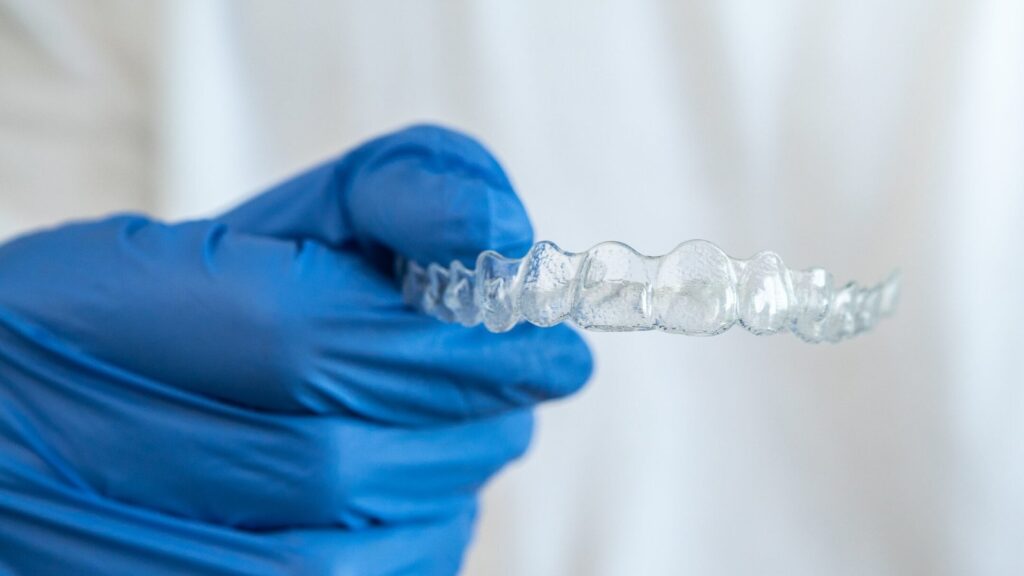
The clinic is located at 68 NE 167th St B, Miami, FL 33162. Q Smiles Dentistry offers a range of dental services in North Miami Beach, including Invisalign, preventive care, cosmetic dentistry, restorative dentistry, emergency dentistry, and dental implants.
One benefit of discussing clear aligners at a comprehensive dental office is that your dentist can look at the full picture. If you need a cleaning, filling, gum evaluation, whitening plan, crown, or tooth replacement discussion, those needs can be considered alongside your alignment goals.
If you want to understand the clinic’s approach, you can learn more about Q Smiles Dentistry before booking your consultation.
How to Prepare for a Clear Aligner Consultation
To prepare for a clear aligner consultation, think about what you want to improve and bring up any dental history that may affect treatment. This includes previous braces, retainers, gum problems, missing teeth, crowns, veneers, implants, jaw pain, or teeth grinding.
Helpful questions to ask include:
- Can clear aligners fix my crowded teeth, gaps, or bite problem?
- Is my case mild, moderate, or complex?
- Would braces or another treatment be more predictable?
- Do I need dental work before starting aligners?
- How many hours per day would I need to wear them?
- Will I need attachments?
- How often will progress visits be needed?
- Will I need retainers after treatment?
These questions help you understand not just whether clear aligners are possible, but whether they are the most responsible option for your goals.
Why Professional Supervision Matters
Professional supervision matters because clear aligners move teeth and affect the bite, gums, roots, and bone support. Even though the trays may look simple, orthodontic treatment is still a clinical process.
The American Dental Association has policies addressing direct-to-consumer dental services and emphasizes that dental treatment should involve appropriate evaluation, diagnosis, and professional oversight. Peer-reviewed research has also reported adverse events associated with direct-to-consumer sequential aligners, including bite problems, pain, sensitivity, and periodontal concerns.
This does not mean clear aligners are unsafe. It means they should be used with proper planning and monitoring. A dentist can check whether your aligners fit, whether your teeth are tracking, whether your gums remain healthy, and whether your bite is improving as intended.
FAQs About Clear Aligners
Can clear aligners fix crowded teeth?
Yes, clear aligners can often help mild to moderate crowded teeth. Severe crowding, impacted teeth, or major rotations may require braces or specialist orthodontic care. A dental exam is needed to know what applies to your case.
Can clear aligners close gaps?
Clear aligners can often close small to moderate gaps between teeth. If gaps are caused by missing teeth, gum disease, tooth size differences, or bite problems, additional dental treatment may be needed.
Can clear aligners fix an overbite?
Clear aligners may help some mild to moderate overbite cases, especially when the issue is related to tooth position. Severe overbites or jaw-related problems may need a different orthodontic approach.
Can clear aligners fix an underbite?
Some mild dental underbite cases may be treated with clear aligners. If the underbite is related to jaw position or skeletal imbalance, braces, specialist care, or another treatment plan may be more appropriate.
Are clear aligners better than braces?
Clear aligners are better for some patients because they are discreet, removable, and easier to clean around. Braces may be better for complex cases or for patients who may not wear removable aligners consistently.
How long do clear aligners take?
Treatment time depends on the complexity of your case, how much movement is needed, and how consistently you wear the aligners. Your dentist can give a more accurate estimate after evaluating your teeth and bite.
Do clear aligners hurt?
Clear aligners may cause pressure or soreness, especially when starting a new set. This is usually related to tooth movement. Severe pain, sharp edges, or poor fit should be discussed with your dentist.
Where can I get clear aligners in North Miami Beach?
You can ask about clear aligners at Q Smiles Dentistry, located at 68 NE 167th St B, Miami, FL 33162. To get started, call +1 305-947-6453 or schedule an appointment with Q Smiles Dentistry.
Ready to Find Out If Clear Aligners Can Help Your Smile?
Clear aligners may be able to improve crowded teeth, close gaps, and correct some bite problems, but the right answer depends on your mouth. A consultation can help you understand whether your case is simple, moderate, or complex, and whether clear aligners are the best path forward.
Q Smiles Dentistry helps patients in North Miami Beach, Golden Glades, North Miami, Aventura, Sunny Isles Beach, Miami Gardens, and nearby Miami communities explore dental care in a professional, welcoming setting.
If you are ready to ask whether clear aligners can help your smile, call +1 305-947-6453 or schedule an appointment with Q Smiles Dentistry.
Sources
- American Dental Association MouthHealthy: Braces and Orthodontic Treatment
- American Association of Orthodontists: Clear Aligners
- American Association of Orthodontists: Braces vs. Clear Aligners
- American Association of Orthodontists: 7 Common Bite Problems
- Cleveland Clinic: Teeth Braces, Types and How They Work
- American Dental Association: Direct-to-Consumer Dental Services Policy
- National Library of Medicine: Adverse Events Related to Direct-to-Consumer Sequential Aligners